Grand Prairie Lead Paint Removal takes on lead paint removal in Duncanville: testing, stripping or stabilizing failing exterior paint, sill and frame work, painted brick, and sealing sound paint in place, for homes built before 1978. Each job starts from two facts, the year the house went up and what a test shows on the surfaces in question, and those decide whether it runs as abatement under DSHS rules or as lead-safe renovation under the EPA’s.
Duncanville’s homes are, as a group, older than Grand Prairie’s. The city went from 3,774 residents at the 1960 census to 27,781 in 1980, and the 2020-2024 American Community Survey estimates about 39,700 today. Of its roughly 14,000 homes, the same survey places 58%, close to 8,140, before 1980; the Grand Prairie figure is 31%.
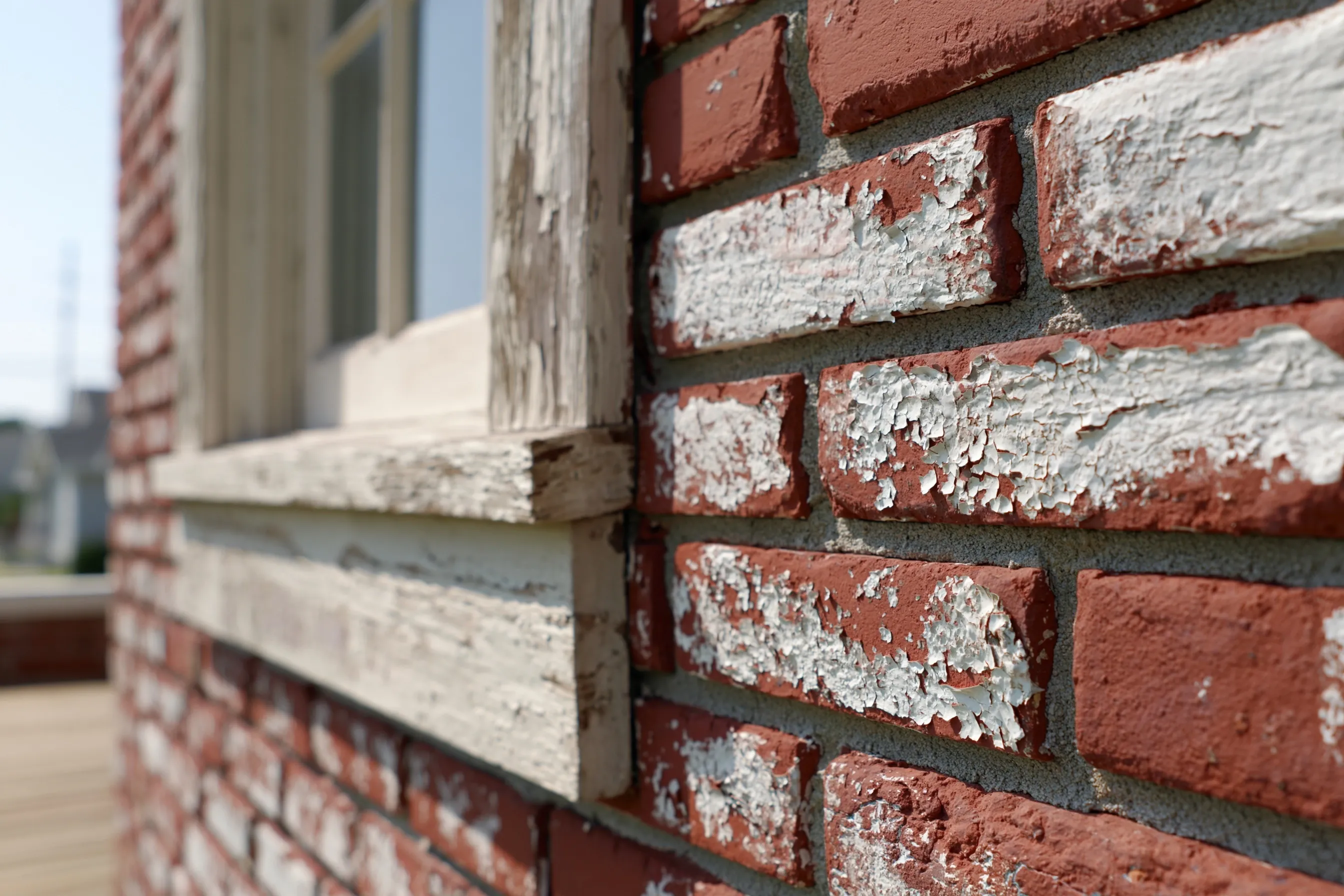
Get the flaking white paint off the west wall and leave bare brick
Testing
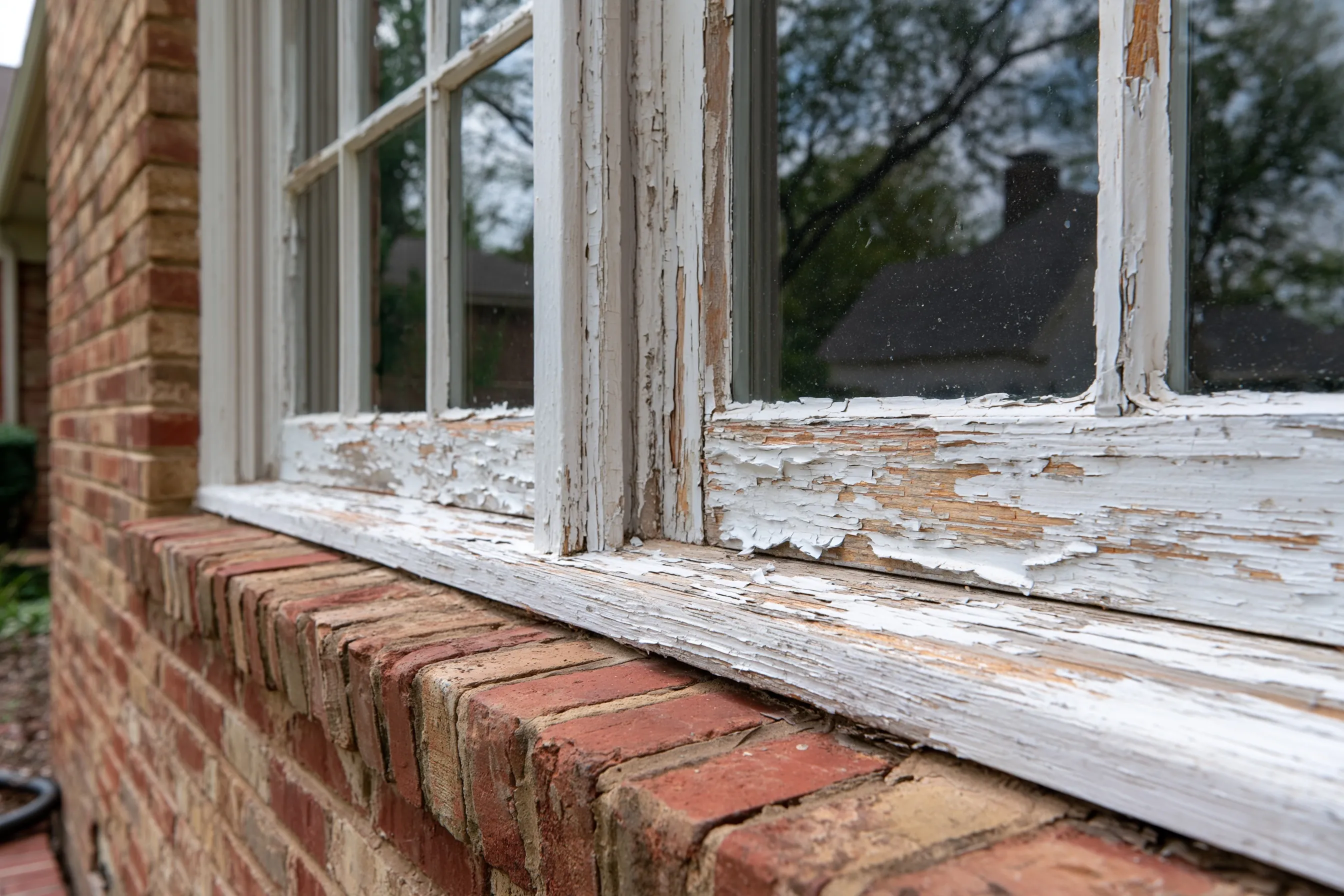
Lead paint in the bottom coat on the brick and on the wood window frame
Wall
West wall, about 380 sq ft of brick
Method
Paste stripper, wet rinse caught on plastic, waste sealed in bags
Estimated cost
$5,400
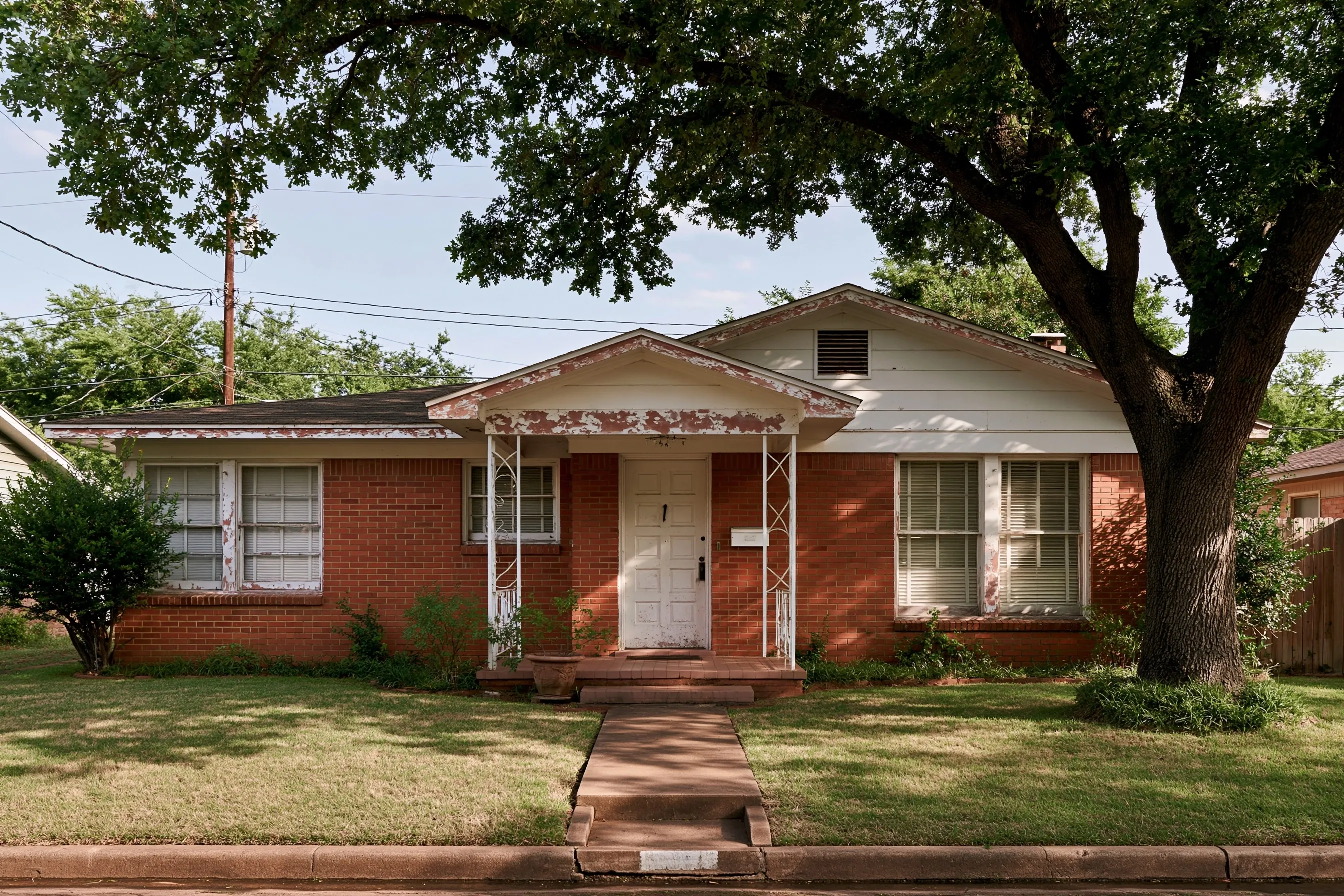
In this example, the owners of a 1960s brick house in Duncanville have a west wall painted white decades ago. The paint is flaking off in patches, and a test of every layer finds lead in the bottom coat.
About 7,260 Duncanville homes date from the 1960s and 1970s, and any of them finished before 1978 can carry lead in its older paint layers. Where paint is peeling from fascia, soffits, siding or garage doors, the choice is stabilizing and repainting under the EPA rule or stripping it as abatement under DSHS rules. The options, the ground protection and the 20 square foot threshold for exterior repairs are explained under peeling exterior lead paint.
Inspection before you scrape or sell
A DSHS-certified inspector can tell you which surfaces carry lead-based paint before a repaint or a sale. Buyers of a pre-1978 Duncanville house get a 10-day opportunity under federal rules to have it inspected or risk-assessed, which the contract can change or waive in writing, and sellers must pass along any lead reports they hold. Our lead paint inspection page compares a full inspection with testing only the parts a job will touch.
Rental houses and duplexes
Duncanville requires single-family rental homes, including duplexes and townhomes, to be registered with the city and inspected. Federal rules add their own layer: the landlord of a pre-1978 rental hands over the EPA lead pamphlet and discloses known lead-based paint before a lease, and the EPA counts rental owners and property managers among those who need certification to disturb paint. One case where that matters is replacing old windows between tenants; see lead paint on window sills and frames.
Stripping or sealing old paint
Paint that is still bonded, on brick or flat siding, can be sealed under an encapsulant or covered with new siding instead of stripped. Paint that is peeling, or on sills and doors that rub, is better removed. Painted masonry has its own considerations, covered under lead paint removal from brick, and the sealing routes are set out under encapsulation and enclosure.
Duncanville housing age
The census counts show when Duncanville was built. The city added about 10,300 residents in the 1960s and 13,700 in the 1970s, then roughly 12,000 in the four decades since, going by the current survey estimate. The housing survey matches that pattern, counting 4,613 homes built in the 1970s, 2,649 built in the 1960s and 584 in the 1950s, with fewer than 300 older than that. Only about 9% of Duncanville homes were built in 2000 or later.
That puts the 1978 cutoff in the middle of the city’s largest group of homes. A house completed in 1976 falls under the federal lead rules and one completed in 1979 does not, yet the census counts both as 1970s houses. Check the county appraisal district record or the original permit for the actual year, and go by the individual house rather than the age of the street.
Duncanville’s Residential Rental Registration ordinance, No. 2340, was adopted on October 16, 2018. It requires single-family homes, duplexes and townhomes used as rentals to be registered, and the city aims it at properties leased for more than 30 days. Registration is renewed every year by December 31. Owners also obtain a Rental Certificate of Occupancy and have the property inspected at initial registration, then every two years or whenever tenants change, whichever comes first. The city lists interior and exterior building conditions among the items inspected, measured against the ordinance, the International Property Maintenance Code and the International Residential Code.
The city page does not mention lead. The model text of the property maintenance code does say that peeling, flaking and chipped exterior paint is to be eliminated and the surfaces repainted, and on a pre-1978 rental that repaint is renovation under the EPA rule. Line up testing, or a certified lead-safe painter, before an inspection date so the fix does not leave chips in the yard or dust in the unit.
A workable order for an older Duncanville house: confirm the construction year; test the surfaces the job will touch; decide surface by surface between stabilizing, stripping, replacement and covering; then schedule around the weather, since spring and fall are easier on crews in protective gear than a North Texas August. If the house is rented, fit the work between tenants or arrange where the household will stay, because abatement firms must keep occupants out during the work. File every report with the deed papers; a future buyer or tenant is entitled to see known lead records.
Are most Duncanville homes old enough to have lead paint?
More than half are old enough to be covered. The ACS dates 58% of Duncanville homes before 1980, and the 1970s share of that includes houses finished in 1978 and 1979, which fall outside the federal rules. Age only tells you lead paint is possible. An inspection by a DSHS-certified inspector, or a certified renovator’s test of the surfaces a job will touch, tells you whether it is there.
Do Duncanville landlords have to disclose lead paint?
Yes, if the rental was built before 1978; the rule is federal and applies statewide. A landlord has to hand the tenant the EPA lead hazard pamphlet before signing, list whatever lead paint, lead hazards and reports they know about, and put a lead warning in the lease, then hold on to the signed paperwork for three years. Exemptions include leases running 100 days or less, zero-bedroom units and homes a certified inspector has cleared of lead-based paint. Registering the house with Duncanville is a separate duty.
Does the state need notice before lead abatement?
Yes. The paperwork falls to the abatement contractor rather than to you. Texas rule 25 TAC 295.214 has the DSHS-certified lead firm send written notice to the department and to its regional office no fewer than seven working days before abatement begins on a pre-1978 home, one notice per separate building. Emergency abatement is the exception: notice goes in as soon as practicable, no later than the next work day.
Who can test paint in a Duncanville home?
For a full inspection or a risk assessment, a professional certified by the Texas Department of State Health Services. For renovation work, an EPA-certified renovator may test the specific components a job will disturb with an EPA-recognized kit or paint-chip sampling. A store-bought kit can tell you something, but it does not exempt surfaces from the renovation rule.
Next door, DeSoto grew later, with its biggest jumps from the 1970s through the 1990s; see lead paint removal in DeSoto.
Request a free lead paint removal quote
Start with the Duncanville address and an estimate of the build year. Let us know which parts need attention, whether tenants live there, whether a city rental inspection or code notice is behind the request, and whether young children are in the home. We'll get back to you soon with an estimate or any questions we have. Estimates are free and there's no obligation.